
As the global community faces increasingly urgent demands for sustainable development, the IDAP program – Enhancing the Inclusive Digital Transformation Ecosystem in Lao Cai and Son La – is no longer seen merely as an initiative promoting digital transformation for small and medium-sized enterprises (SMEs). It is increasingly asserting itself as a data- and technology-driven experimental platform for green transition. By pioneering the integration of two development axes—digitalization and greening—IDAP is opening up a new approach to agricultural, livelihood, and community development models grounded in innovation.
Dual transition is not a simple pairing of technologies, but a synergistic development strategy
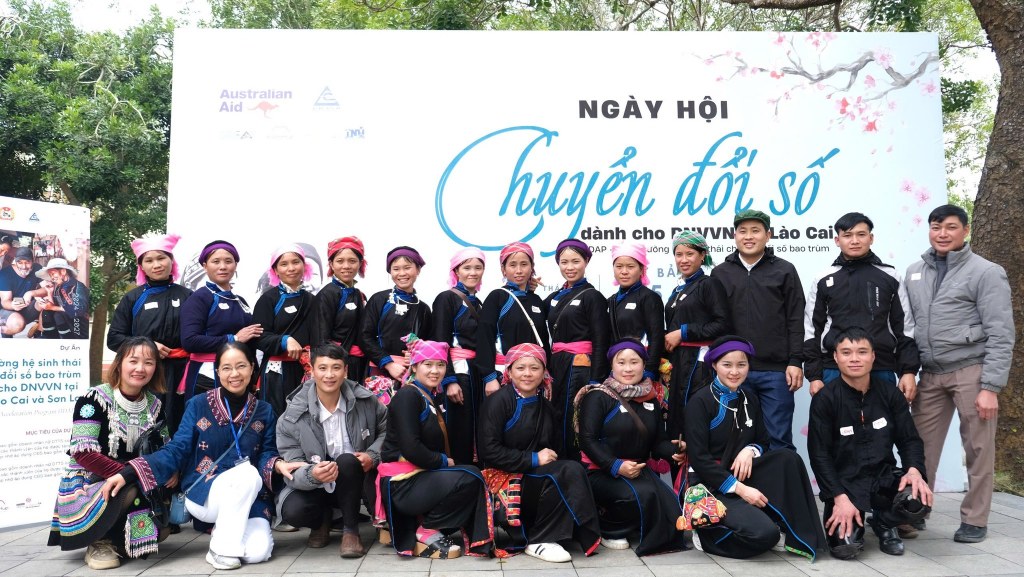
The “Dual Transition: Digitalization – Greening” initiative emerged as a strategic response to two major trends: the digital transformation of rural agriculture and ecological restoration. During its initial phase (2025–2026), KisStartup did not stop at disseminating knowledge or introducing technologies. Instead, the program deliberately constructed a systematic chain of activities—from community education and awareness-building to the formation of voluntary organizations; from value chain analysis to the establishment of initial data platforms for ecological farming.
The distribution of learning kits, the organization of green–digital learning tours, and the encouragement of students to document “transition diaries” demonstrate that IDAP is not merely deploying technology. It is cultivating a culture of learning, sharing, and hands-on practice within rural communities.
IDAP as an “open incubator” for impact-oriented technologies
One of the initiative’s most distinctive contributions is the design of IDAP as an ecosystem for incubating and piloting impact technologies, particularly those aimed at reducing agricultural waste, regenerating soil, saving energy, or creating commercially viable green products. A key highlight is the structured connection between scientists, enterprises, farming households, and students within an organized outsourced R&D model.
Through this model, SMEs or cooperatives that lack the capacity to invest in in-house R&D can still experiment with low-cost yet high-impact technological solutions, such as compact composting units, soil moisture sensors, or digitalized farming process tools. Importantly, experimentation does not take place in closed laboratories, but directly in the field—creating iterative loops of learning, improvement, and scaling that are closely aligned with the real needs of producers.
Data for green transition – Laying the foundation for a “digital ecological economy”
As transformation models begin to take shape and spread, IDAP enters a new phase: datafication and technologization of green transition. The collection of data on yields, processes, costs, and traceability not only enhances farmers’ internal management capacity, but also provides a foundation for measuring effectiveness—thereby enabling input optimization, productivity improvement, and product standardization for market access.
More importantly, this marks the beginning of an “open library of data-backed dual-transition models”, allowing other localities to learn, adapt, and implement based on evidence. Data also opens the door for green-transition products to attract investment, access green finance, or participate in markets that demand supply-chain transparency, such as the EU and Japan.
Digitalization for greening – When digital platforms become environmental drivers
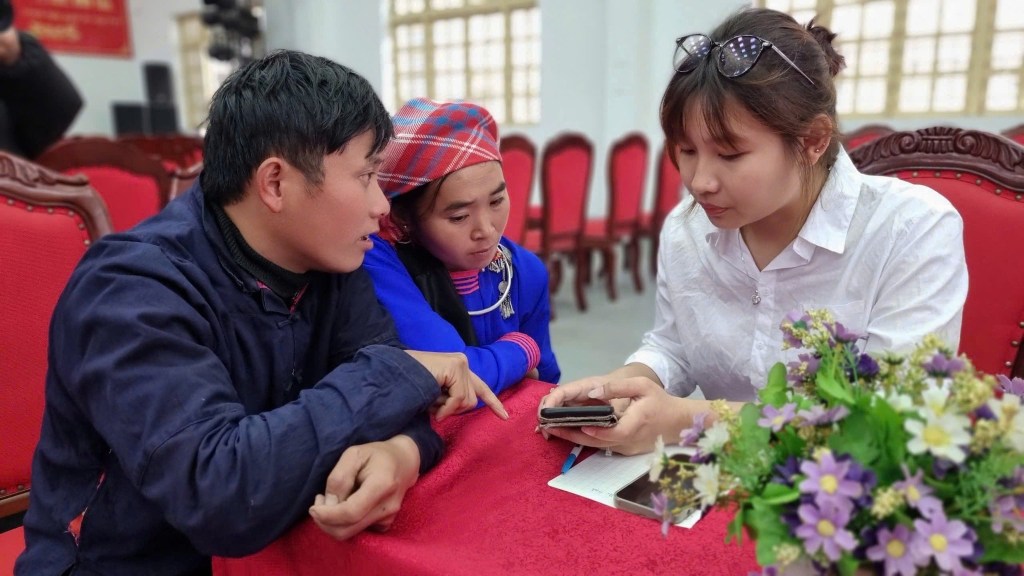
Through training in advanced digital skills—such as product content design, QR code utilization, livestream selling, and digital storytelling—the program demonstrates that digitalization is not merely a marketing channel, but a core infrastructure for sustainable development. Ecological agricultural products are no longer confined to local markets. With digital platforms, they can tell their stories, inspire consumers, and reach broader markets.
Crucially, when products are embedded with production data and environmental indicators, they become more than commodities—they become evidence of responsible transformation processes.
Synergistic impacts – From nuclei to ecosystems
By the end of Phase Two (October 2026), IDAP aims to establish at least 30 data-validated models, 20 branded ecological products, and an interactive digital map serving as a “living infrastructure” for learning, replication, and subsequent investment. The organization of a local Green–Digital Fair is not merely a closing event, but a critical expansion step—affirming that digital transformation cannot be separated from green-transition objectives.
IDAP – A catalyst for local digital–ecological economies
From its initial role as a digital transformation support program for SMEs, IDAP has now moved beyond that framework to become a dynamic catalytic component for synergistic innovation—where digital technologies meet green technologies, where data connects with community culture, and where individuals who once believed they “could not innovate” begin to take action.
Within this ecosystem, KisStartup plays the role of a commercialization agent and intermediary organization—one that understands technology while remaining deeply embedded in communities—creating sustainable bridges between knowledge, markets, and people.
With its flexible, multi-actor approach and strong belief in community power, IDAP’s dual-transition model is fully scalable to other localities, gradually contributing to the formation of a digital ecological economy ecosystem—where innovation is driven not only by profit, but also by environmental stewardship and inclusive, balanced development.
ABOUT THE IDAP PROJECT
IDAP (Inclusive Digital Acceleration Program) – Enhancing the Inclusive Digital Transformation Ecosystem for SMEs focusing on agriculture and tourism in Lao Cai and Son La provinces – is funded by the GREAT Program (Gender Responsive Equitable Agriculture and Tourism). The project is implemented by KisStartup Joint Stock Company as the lead implementing partner from 2024 to 2027.
The GREAT Program – Promoting Gender Equality through Improved Agricultural Production Efficiency and Tourism Development in Lao Cai and Son La is an initiative funded by the Australian Government and managed by Cowater International. Phase One was implemented from 2017–2022, while Phase Two (GREAT 2) runs from 2024–2027, with a total investment of AUD 67.4 million from the Australian Government.

 Nguyễn Đặng Tuấn Minh's Blog
Bình luận về bài viết này