
Successful startup ecosystems around the world share one key trait: they have identified a unique identity and turned it into a competitive advantage. So, how can Vietnam discover its own identity?

Joan Miró’s Woman, Bird, Star (Homage to Pablo Picasso) Nguồn: https://www.spanish-fiestas.com/joan-miro-catalan-artist/
Nearly 15 years have passed since the concept of “innovation” was first vigorously promoted in Vietnam with the commitment of the Ministry of Science and Technology and support from the Finnish Government (2009). Terms such as “innovation startup” and “startup ecosystem” have since become commonplace in Vietnamese society. These 15 years offer an opportunity to reflect on certain indicators used internationally to assess Vietnam’s presence on the global startup ecosystem map.
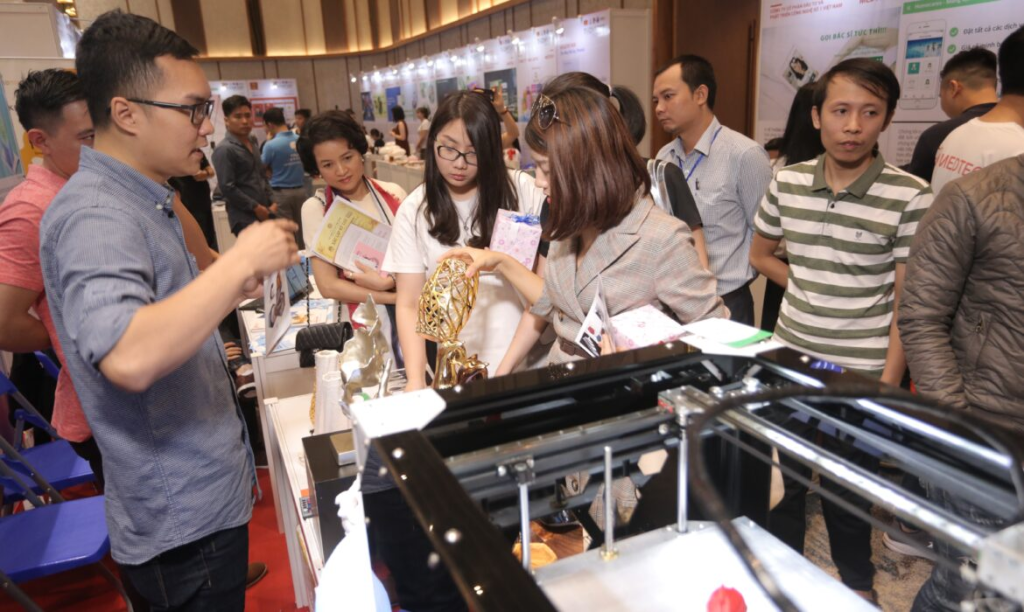
Startup showcasing their products at Techfest 2018. Photo: TF.
According to the Startup Blink Global Startup Ecosystem Index 2023, Vietnam ranks among the top 60 global startup ecosystems but has dropped four places compared to 2022.
In 2023, Startup Genome ranked Ho Chi Minh City as Vietnam’s only representative among the top 100 emerging startup markets globally, specifically in the 81–90 group.
These numbers may provide some perspective on Vietnam’s current position compared to its past. They also reflect how startups and investors around the world perceive Vietnam. However, they do not reveal the unique characteristics or distinctive value propositions of the Vietnamese ecosystem—what makes it attractive, what core challenges it is solving for local and international communities.
When it comes to identifying a distinct feature of the Vietnamese startup ecosystem, it’s hard to pinpoint a clear, uncontested term or image.
In contrast, major global startup hubs can be described using concise phrases that capture their core advantages—developed through years of experience and self-discovery. These identities form the basis of their long-term strategies and become a unique and sustainable competitive edge. Let’s examine some examples:
- Silicon Valley, USA:
- Risk-taking and entrepreneurial mindset
- Abundant venture capital and angel investment
- Dense networks of entrepreneurs, mentors, and advisors
- Strong ties with top universities like Stanford and UC Berkeley
Key strengths: Agtech (#1 globally), Fintech (#1 globally)
- Berlin, Germany:
- Affordable living costs
- Diverse and international community
- Rich cultural landscape and quality of life
- Government initiatives supporting startups and innovation
Key strengths: Cleantech (#11), Blue Economy (#38), Fintech, AI/Data Analytics
- Bengaluru-Karnataka, India (#20 globally):
- Mature ecosystem with unicorns and major firms
- Highly skilled workforce
- Strong government support
Key strengths: Agtech (#13), Fintech (#21), Life Sciences, Cleantech
- Tel Aviv, Israel:
- Synergy between military service and entrepreneurial culture
- High risk tolerance and mature ecosystem
- Government support through tax incentives and early adoption
Key strengths: Cleantech (#2), Fintech (#4), AI & Big Data, Cybersecurity, Life Sciences
- Kuala Lumpur, Malaysia:
- Young, well-educated workforce (average age 30.3, EF English Index #3 ASEAN, #24 globally)
- Business-friendly policies promoting digital nomad hubs
- Government-backed funding and VC support
Key strengths: Fintech, E-commerce, Health Tech
- Buenos Aires, Argentina:
- Tech talent via free education and strong English proficiency
- International community and digital nomad hub
- Proximity to major U.S. startup markets
Key strengths: Fintech, Blockchain, AgriTech & Novel Foods
- Beijing, China (#7 globally in 2023):
- Huge domestic market and growing middle class
- Government support for tech startups
- Rapid adoption and scale of new tech
- Strong focus on E-commerce and tech-driven enterprises
Key strengths: Agtech (#8), Fintech (#6)
As for Vietnam, while media—domestic and international—often cite the country’s strength in young, talented human resources, there are many reasons why this strength hasn’t yet translated into a competitive advantage. Despite Vietnam’s technical talent potentially outperforming neighboring countries, weak English proficiency remains a major hurdle. Even among the few with both technical and language skills, an entrepreneurial mindset remains rare.
In terms of sectors, Startup Blink identifies the strengths of Vietnam’s two main startup cities as follows:
- Hanoi: EdTech and Fintech
- Ho Chi Minh City: E-commerce and Retail
However, these strengths are mainly investment-driven and not yet backed by robust policy environments (e.g., regulatory sandboxes) to foster groundbreaking solutions—particularly in Fintech—despite years of policy discussions.
From Identity to Competitive Advantage
Vietnam’s startup ecosystem is growing fast and achieving some noteworthy results, but it still lacks a clearly defined identity and competitive edge. Some key reasons include:
Uneven ecosystem development:
Vietnam’s ecosystem is still in its early stages, with major gaps between large cities and other regions. Even in dynamic hubs like Hanoi and Ho Chi Minh City, ecosystem components vary in maturity. According to Startup Genome, which evaluates ecosystems on six dimensions—Performance, Funding, Connectedness, Market Reach, Knowledge, and Talent & Experience—Ho Chi Minh City scores 5/10 in Funding and 7/10 in Talent & Experience, while the rest are at a nascent level (1/10).
Weak internal connectivity:
Most collaborations remain short-term, lacking long-term strategic planning. Startups, investors, support organizations, and universities still lack deep integration, limiting startups’ access to essential resources like funding, tech support, and markets.
Limited global vision:
Although over 5 million Vietnamese live abroad—including 600,000+ knowledge workers—Vietnam has yet to tap into this diaspora effectively. Most local startups lack a global product vision and do not leverage Vietnam’s strong network of bilateral trade agreements to scale internationally.
According to Prof. Daniel Isenberg (Harvard & Babson), an ecosystem’s identity stems from elements like culture, government policy, education, and capital markets. Competitive advantage must be recognized and nurtured by the nation itself through strategic elevation and adaptability to global trends.
Moving Forward: Toward a Unique and Competitive Identity
After 15 years of brave experimentation, it’s time for Vietnam’s startup ecosystem to harness its distinct strengths. Here are some recommendations:
Identify core strengths:
Vietnam’s potential global offerings include EdTech, AgriTech, HealthTech, Biotech, Novel Foods, and CulturalTech.
Solve real local problems while engaging with ASEAN:
Vietnamese startups should focus on solving real societal issues domestically—such as environmental and social challenges—using local markets as testbeds for impactful innovation before expanding globally. ASEAN (600 million+ population) can be a springboard for regional and international scaling.
Nurture a unique entrepreneurial culture:
Developing a local startup culture takes time and policy support. Vietnam’s welcoming and friendly culture could appeal to digital nomads seeking a base in Southeast Asia.
Host events and global meetups:
Organizing global startup gatherings could build global networks, attract investment and talent, and position Vietnam as a rising ecosystem with both global reach and local depth.
Leverage and fix education:
Partner with education institutions to nurture entrepreneurial skills while reforming weaknesses in the current education system. Harness the talent network but also build long-term programs to develop entrepreneurial mindsets.
Build a strong brand identity:
Develop a distinctive ecosystem brand using compelling storytelling, symbols, and marketing materials to communicate its unique value proposition.
Measure and evaluate:
Collect high-quality, regularly updated data to monitor performance and refine strategies.
Promote inclusion and sustainability:
Design programs that foster diversity and promote environmentally and socially conscious startups to attract like-minded investors and founders.
By systematically addressing these areas and continuously improving based on data and feedback, Vietnam’s startup ecosystem can craft a unique identity and transform it into a powerful competitive edge—drawing in talent, capital, and global opportunities.
This article reflects the author’s personal views.
1 The author uses the launch of the Finland–Vietnam Innovation Partnership Program in 2009 as a reference point: Link
Originally published in Tia Sáng, Issue 4/2024.

 Nguyễn Đặng Tuấn Minh's Blog
Bình luận về bài viết này