
* This article was written during our fortunate journey to Vietnam’s Northwest region—an area rich in culture and filled with vibrant life and smiling faces. Our mission to bring digital transformation to businesses, communities, and individuals in the Northern highlands made us realize a unique perspective: digital transformation is driving a revolution in how we preserve and leverage cultural heritage. Technology is not merely a tool—it opens entirely new approaches.
— Nguyễn Đặng Tuấn Minh
One chilly afternoon in Bản Liền, where the Northwestern mountains blend with the scent of ancient Shan Tuyet tea, a foreign visitor gently stepped into the kitchen of a traditional stilt house. He reached up to take down a smoked bamboo tea tube, carefully split it open, and removed a small handful of dried tea.
Around the flickering kitchen fire, a group of guests gathered, watching as he prepared the tea, poured the hot water, and waited for the first drops. They drank the tea in warmth and silence—no need for elaborate explanations. Their sparkling eyes and the way they savored the aroma conveyed everything. The story of tea extended beyond taste; it touched emotion.
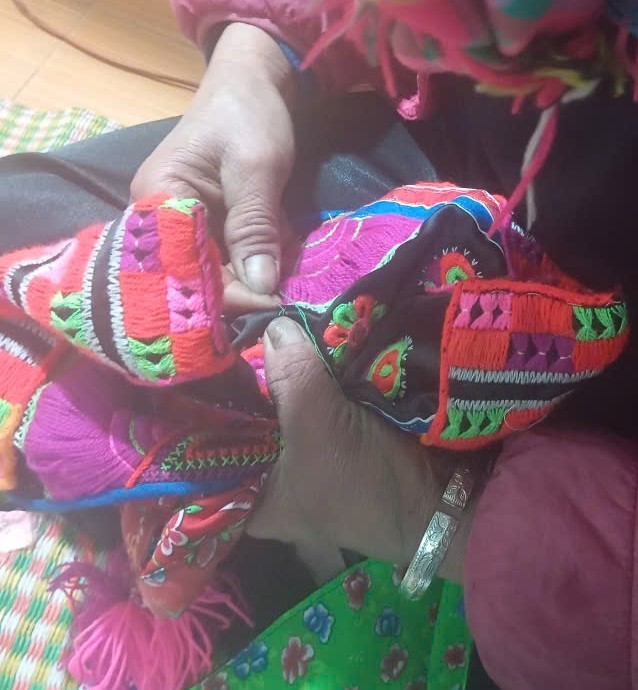
A Tày artisan sewing and embroidering a traditional pouch in Bản Liền, Bắc Hà.
That very moment sparked more than 100 orders of smoked Shan Tuyet tea in just 24 hours after the story was shared on social media. This wasn’t just a business success story—it was living proof of the powerful potential of cultural heritage when combined with digital technology.
Sustainable Business Built on Cultural Heritage
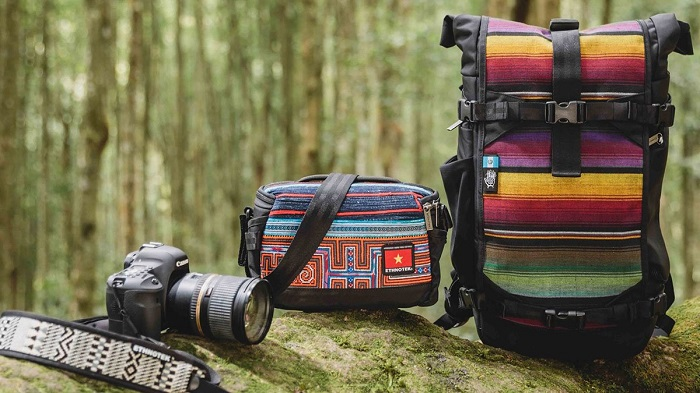
Ethnotek, a social enterprise founded by Jake and Cori Orak in 2010, discovered a way to preserve cultural heritage by creating high-end backpacks featuring handwoven fabrics from artisan communities around the world—including Vietnam, Ghana, Guatemala, India, and Indonesia.
Jake’s inspiration came during a trip to Vietnam in 2007, where he was captivated by the intricate handwoven fabrics crafted by local artisans. Realizing that industrialization could threaten these traditional techniques, he set out to build a business model that not only created economic value but also preserved and celebrated cultural traditions.
Ethnotek’s signature design, “Threads,” consists of interchangeable and customizable fabric panels handcrafted by artisans in Vietnam, Indonesia, Ghana, India, and beyond. This approach not only adds personalization to each product but also enables customers to directly support multiple artisan communities. All products are manufactured in a single workshop in Vietnam, using centralized production to minimize environmental impact and ensure quality.
Using Digital Technology to Preserve and Amplify Culture
Ethnotek doesn’t just utilize traditional craftsmanship—they also integrate digital tools effectively to enhance value:
Developing sustainable products: Ethnotek incorporates recycled materials and uses technology in production and supply chain management to reduce environmental impact—creating culturally rich and environmentally friendly products.
Sharing cultural stories through online platforms: The brand uses social media, its website, and e-commerce platforms to share stories about artisans, traditional weaving techniques, and the journey of each fabric to the customer. This raises awareness of cultural heritage and strengthens the connection between customers and artisan communities.
Fostering a global community: Ethnotek refers to its customers as “tribe members,” encouraging them not only to purchase products but to join a movement for cultural preservation. Technology has connected thousands worldwide around this shared purpose.
Cultural Heritage in the Experience Economy
The stories of Bản Liền and Ethnotek reflect a clear trend: cultural heritage is no longer just something to preserve—it has become a valuable asset in the experience economy. As consumers seek emotional connection and meaningful experiences, traditional cultural values become increasingly precious.
Vietnam, ranked 24th in cultural richness globally (U.S. News & World Report), holds untapped potential. Traditional values such as Shan Tuyet tea in the Northwest, Đông Hồ paintings, and artisanal craft villages can form the basis of unique products and experiences that cater to modern consumer trends.
Digital Technology: Redefining Access to Heritage
Digital transformation is revolutionizing how we preserve and access cultural heritage. Technology is not only a support tool—it offers entirely new perspectives. For example:
- The Louvre has implemented virtual reality (VR) tours, enabling millions to visit remotely.
- The Virtual Angkor project digitally recreates the Angkor Wat empire at its peak, immersing users in stories of the past.
Technologies like VR, AR (augmented reality), and AI not only revive cultural values but also make them more accessible to younger generations accustomed to digital experiences. Businesses based on cultural heritage now have the tools to reach global audiences beyond geographic limitations.
New Business Models Based on Cultural Heritage
Business models aren’t just about creating and capturing value—they are about adapting to societal changes and evolving consumer needs. Based on cultural heritage, new business models are emerging in two main directions:
Creating entirely new models using technology to develop unique products and services: The Venice Time Machine, for example, digitizes 14th-19th century archives into a database—not only for research but also to unlock new potential for digital tourism.
Revitalizing existing models by enhancing cultural value through technology: As seen in Bản Liền, sharing emotional tea experiences on social media immediately created strong consumer engagement through digital channels.
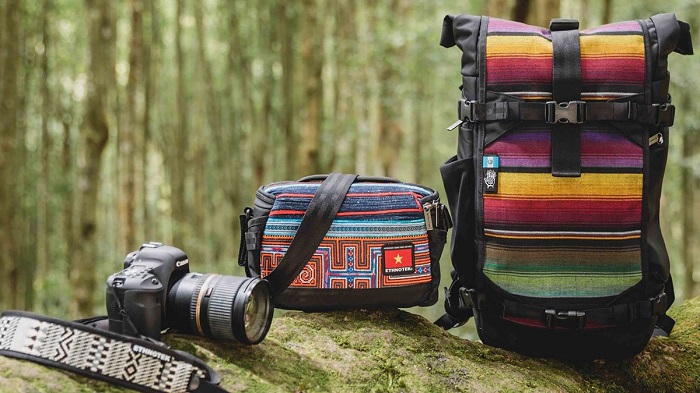
Many of the patterns on Ethnotek’s backpack fabrics are woven by Vietnamese artisans. Photo: Courtesy of Ethnotek
Meeting the Expectations of Modern Consumers
The rise of Gen Z and Millennials—who demand personalized and digital experiences—is pushing businesses to innovate continuously. These consumers seek not only quality products but meaningful experiences that connect emotionally and culturally.
Bản Liền’s story shows how a simple, authentic cultural moment can move people. Meanwhile, larger initiatives like Virtual Angkor and Venice Time Machine demonstrate that the fusion of technology and culture produces limitless value.
Why Developing Digital Business Models Matters
Building business models rooted in cultural heritage is not just a strategy—it’s a national opportunity. Vietnam, ranked 43rd among 89 dynamic startup ecosystems, has a significant chance to foster creative enterprises based on heritage. This opens the door for small businesses to go global, especially in experiential tourism and handicrafts.
Moreover, clearly demonstrating the economic value of heritage-based business models helps attract investment—both domestic and international. Expanding global reach via digital platforms also enhances Vietnam’s status in the global experience economy.
Lastly, this approach can bring international tech talents to Vietnam, collaborating with local communities to preserve and develop Vietnamese cultural values.
Opportunity at the Intersection of Culture and Technology
The stories from Bản Liền and Ethnotek are just glimpses of the broader potential when cultural heritage meets digital technology and entrepreneurial spirit. With its rich cultural resources, Vietnam can develop business models that not only succeed economically but also preserve and elevate traditional values. This is not just a method of heritage conservation—it is a path for Vietnam to thrive and assert its role in the global economy.
Vietnam—with its diversity of tangible and intangible heritage—can learn from Ethnotek to build new business models. Craft villages like those weaving brocade in the Northwest, Bat Trang ceramics, or Van Phuc silk are valuable assets for creating high-value, personalized products. When integrated with digital technology—e.g., e-commerce, AR/VR, or digital marketing—these products can not only reach domestic markets but expand globally.
Risks and Challenges to Consider
However, the use of digital technology to exploit cultural heritage also presents challenges—particularly in the area of intellectual property:
Lack of clear legal frameworks: In Vietnam, IP protection in the digital cultural space is still underdeveloped, leaving small businesses and individuals vulnerable to disputes or lawsuits.
Risk of copyright infringement: Digitized cultural heritage can be easily copied and used illegally by third parties, leading to economic losses and diminished authenticity.
Ownership disputes: Cases have emerged globally where intangible heritage was copyrighted by foreign entities, complicating the protection of artisan community rights.
Reference:
[1] https://floratheexplorer.com/ethnotek-backpacks-review/
[2] https://weworkremotely.com/company/ethnotek
[3] https://wanderlustandlipstick.com/blogs/travelpurpose/2013/08/13/gear-re…
[4] https://impakter.com/ethnotek-bags-win-win-sustainable-terms/
[5] https://www.zoominfo.com/c/ethnotek-bags/348703448
[6] https://ethnotek.com/blogs/news/the-big-story-10-years-of-ethnotek
[7] https://ethnotek.com
[8] https://ethnotek.com/pages/about-ethnotek
[9] https://www.causeartist.com/jake-orak-founder-ethnotek/
[10] https://www.kajimundo.com/showcase-directory/ethnotek
Nguồn: https://khoahocphattrien.vn/khoa-hoc/khi-di-san-van-hoa-tro-thanh-nguon-cam-hung-cho-mo-hinh-kinh-doanh-moi/2024121909301221p1c160.htm

 Nguyễn Đặng Tuấn Minh's Blog
Bình luận về bài viết này